Long overlooked in textbooks and stories, women scientists are now reclaiming space in literature.
Biographies, novels, and essays work to repair history, telling the tales of those who counted - but were forgotten.
Invisible Heroines
In classic science narratives, women often appear only in peripheral roles - as assistants, wives, or muses.
Yet, researchers like Marie Curie, Ada Lovelace, and Rosalind Franklin left indelible marks.
Still, their literary presence - whether in science, history, or fiction - was rare until the twentieth century. Academic writing long favored neutrality and collectivity, often erasing individuals and especially women.
This silence is also social: few women had access to education, publication, or academic recognition.
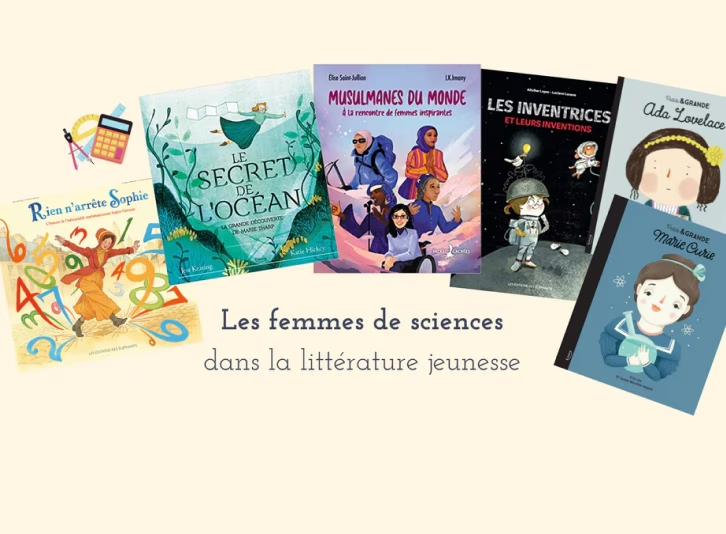
Collection of books about women in science for children- from “Les livres qui sèment”
When Fiction Heals History
In the past twenty years, women writers have revived these overlooked figures.
Works like “Hidden Figures” by Margot Lee Shetterly, “Hypatia of Alexandria” by Maria Dzielska, and “Ada Lovelace: Computer Wizard of Victorian England” by Lucy Lethbridge have brought women scientists back into the spotlight.
“For the last three years, it has been my job to make sure that these women and their accomplishments are written into history.”
These works blend scientific storytelling and historical fiction, bridging rigor and emotion.
They show science can be told differently: through human journeys - full of doubts, courage, and intuition.
More Than a Tale, a Memorial Act
Literature now does more than tell destinies: it repairs a collective memory.
By returning women scientists to the narrative, it changes our perception of progress and women’s role in society.
What science forgot, literature recalls. Reading these works today means recognizing that knowledge has always been built by many voices—even when not all have been heard.